By: Mark Hall
I reached a small, isolated airstrip in Southern Alberta just as the first light touched the prairie. The sunrise was the kind that stops you in your tracks: wide, golden, and impossibly calm. It’s the kind of morning that reminds you why this land holds such a deep place in people’s hearts. And in those same hearts lives another Alberta icon: the mule deer.
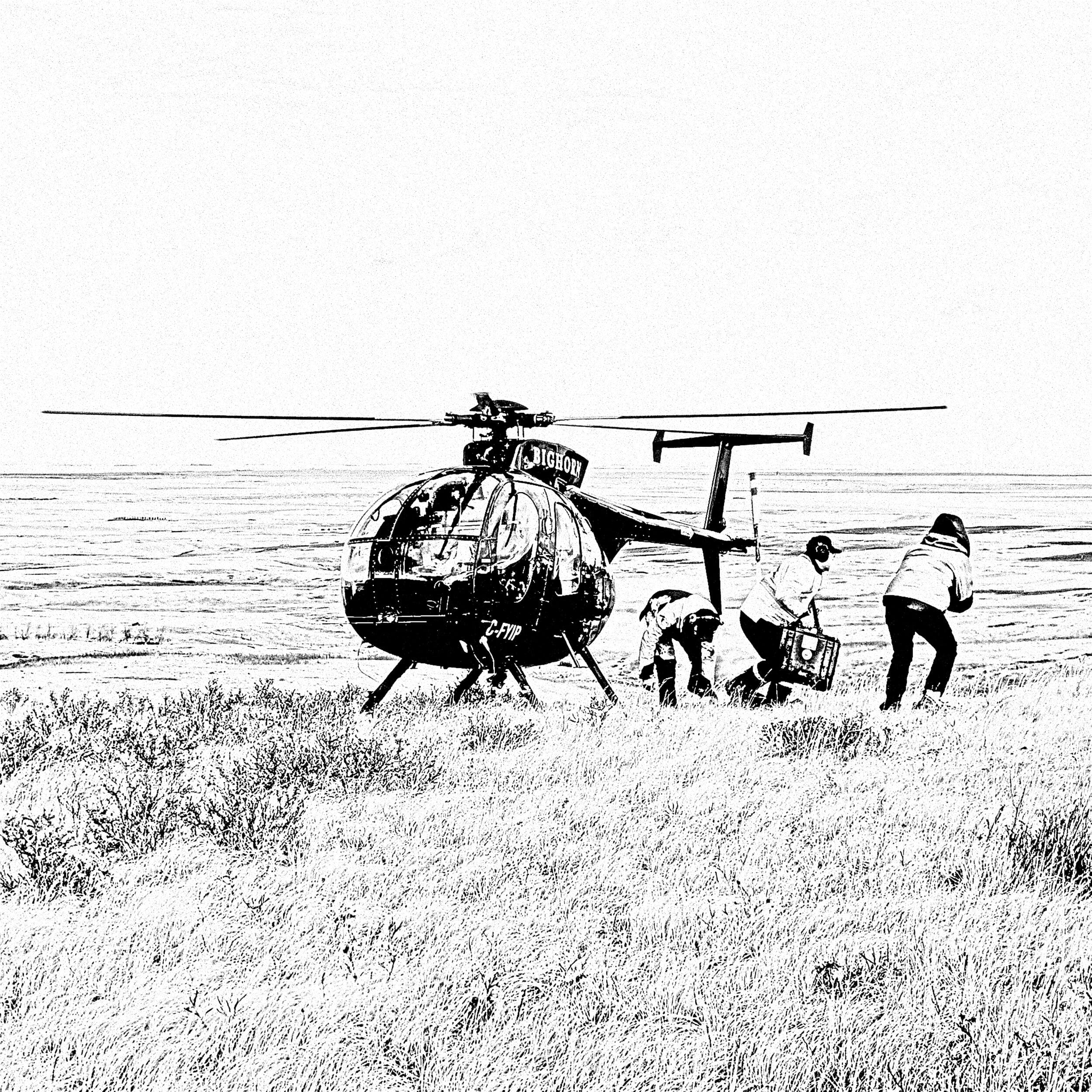
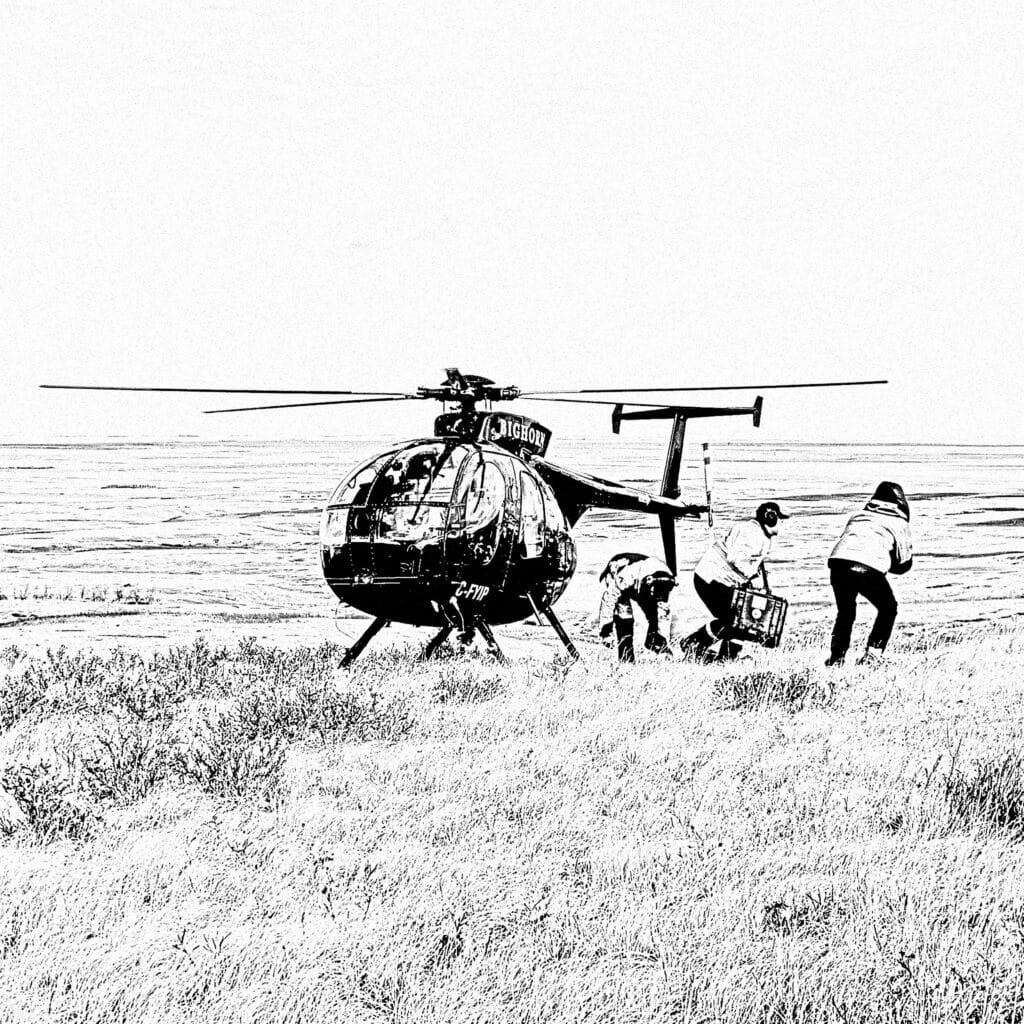
Around me, pilots and capture crews moved with quiet purpose. They checked and re‑checked their gear, topped up fuel, and gathered for a final rundown of the morning’s plan. There was a hum in the air, not from the helicopters, but from anticipation. Then, as the sun finally broke over the horizon and poured warmth across the prairie, the skids were up, and the teams rose into the sky to search for the deer that define so much of this landscape.
The Alberta Mule Deer Collaring Project, led by the Alberta Professional Outfitters Society and supported by Alberta Forestry & Parks, the Alberta Conservation Association, and Grand Slam Club Ovis Canada, is unlike anything I’ve seen. It may be the largest privately led mule deer research effort in the world. And its purpose is simple but profound: to understand how mule deer live, move, and survive so we can better care for the lands they depend on.
Mule deer live almost everywhere in Alberta, quietly telling the story of the land’s health. By fitting a small GPS tracking collar on each captured deer, biologists can follow their journeys and learn where they travel, where they struggle, and ultimately, what they need to thrive.
From our helicopter, the film crew documented one of the capture teams at work. They gently separated a deer from its group and skillfully captured it with the net. On the ground, the team moved with the precision of a Formula 1 pit crew: calm, fast, and deeply respectful. They collected a few samples, checked the deer’s condition, fitted the collar, and within minutes lifted the hood from its eyes. The deer bounded away, back toward its herd, carrying with it a tiny device that would quietly share the story of its life.
Every deer has a path, its own route through seasons, storms, dangers, and safe places. Through these collars, each deer reveals that path to the biologists watching over them. Each data point becomes a clue. Each clue becomes understanding. And together, those understandings point us toward something bigger: a clearer picture of what mule deer need, and a better way to protect the landscapes we all share.
This is the heart of “The Path Forward”.
A story of people, wildlife, and the land that connects them.