By Mark Hall
When hunters and scientists sit down together, the conversation often turns to the land, the animals, and the future of conservation. In Alberta, that dialogue has taken on a fascinating new dimension—one rooted in something as small and ordinary as a tooth.
Dr. Everett Hanna, wildlife scientist at Lethbridge Polytechnic and director of the Wildlife Analytics Lab, has built a program that is quietly revolutionizing how we understand the age and life history of wild animals. His lab specializes in cementum annuli analysis—a microscopic technique that reads growth rings in teeth much like dendrologists count rings in trees. Each ring represents a winter survived, offering a precise record of an animal’s age.
For hunters, managers, and conservationists alike, this information is gold. Knowing whether a harvested deer was two years old or six, or whether a bear was a mature adult rather than a cub, changes how we evaluate population health, reproductive potential, and long-term sustainability. “Managers need to know plus or minus a year,” Hanna explains. “That level of accuracy is critical when you’re talking about species whose prime reproductive years may only span a few seasons.”
Traditional field estimates—looking at tooth wear or body size—can only provide rough categories: young, middle-aged, or old. Cementum analysis, by contrast, delivers fine-scale resolution. This matters because wildlife populations are managed on tight margins. A deer herd with too many young animals may struggle to reproduce effectively, while one dominated by older individuals could be nearing decline.
The lab’s work also extends into enforcement and forensic science. In one case, teeth helped determine whether a bear harvested in British Columbia was illegally taken as a cub. The analysis revealed the animal was several years old, though unusually small—a dwarf bear. Such precision not only informs management but also ensures fair and lawful hunting practices.
Until recently, Canadian wildlife teeth were shipped south to U.S. labs for analysis. Hanna saw both a scientific gap and an opportunity. With support from Lethbridge Polytechnic and a spark of collaboration with the Alberta Professional Outfitters Society (APOS), he began developing the capacity to process samples at home.
The lab’s inception was humble—repurposing a cryostat machine designed for soft tissue to cut teeth into thin sections. But the vision was clear: create a Canadian hub for tooth aging that could serve both researchers and hunters. Early validation came through blind tests against the established U.S. lab, proving the Alberta team could match accuracy.
Momentum grew quickly. APOS stepped in with funding, equipment support, and advocacy. Their contributions—approaching half a million dollars—allowed the lab to expand staffing and technology. In recognition, Lethbridge Polytechnic renamed one of its teaching spaces the Alberta Professional Outfitters Society Wildlife Conservation Lab, a daily reminder of the partnership between hunters and scientists.
The story of support doesn’t end there. Alberta’s Minister’s Special Licenses (MSLA) program channels money from auctioned hunting tags directly into conservation. At expos in Reno and Salt Lake City, hunters bid competitively for the chance to pursue iconic species like bighorn sheep. The funds raised—often far beyond the cost of a regular hunt—flow back into Alberta through grants managed by APOS and the Alberta Conservation Association.
Institutions like Hanna’s lab apply for these grants to fund research, equipment, and student training. In this way, hunters from across North America are directly underwriting the science that safeguards the very wildlife they pursue. It’s a virtuous cycle: hunters invest in conservation, scientists generate knowledge, and managers apply that knowledge to sustain healthy populations for everyone.
For students at Lethbridge Polytechnic, the lab is more than a research facility—it’s a hands-on classroom. They learn histology, microscopy, and the intricacies of wildlife biology while contributing to real-world conservation outcomes. Processing thousands of mule deer teeth from Alberta’s chronic wasting disease monitoring program, for example, gives students both technical skills and a sense of purpose.
The lab’s partnership with hunters ensures that these students aren’t just studying theory; they’re part of a living system where science, policy, and community intersect. As Hanna notes, “It’s incredible to walk past the lab every day and see APOS’s name and logo. It’s a legacy effect that will continue to bear fruit for years to come.”
At its heart, tooth aging is about more than science—it’s about collaboration. Farmers, hunters, scientists, and policymakers all have a stake in the health of Alberta’s wildlife. By unlocking the secrets hidden in teeth, the Wildlife Analytics Lab provides the data needed to balance those interests responsibly.
For hunters, it validates their role as conservationists. For students, it offers a pathway into meaningful careers. For the public, it ensures that wildlife management decisions are grounded in evidence, not guesswork.
And for the animals themselves, it means their stories—written in the rings of their teeth—are heard, respected, and used to guide a future where conservation is truly for everyone.
Citation: Hall, Mark (Host). Alberta Conservationist Podcast: Fangs to Facts || Ep. 1 with Dr. Everrett Hanna. 2025. Available of Spotify and Apple Podcasts under the Hunter Conservationist Podcast channel.
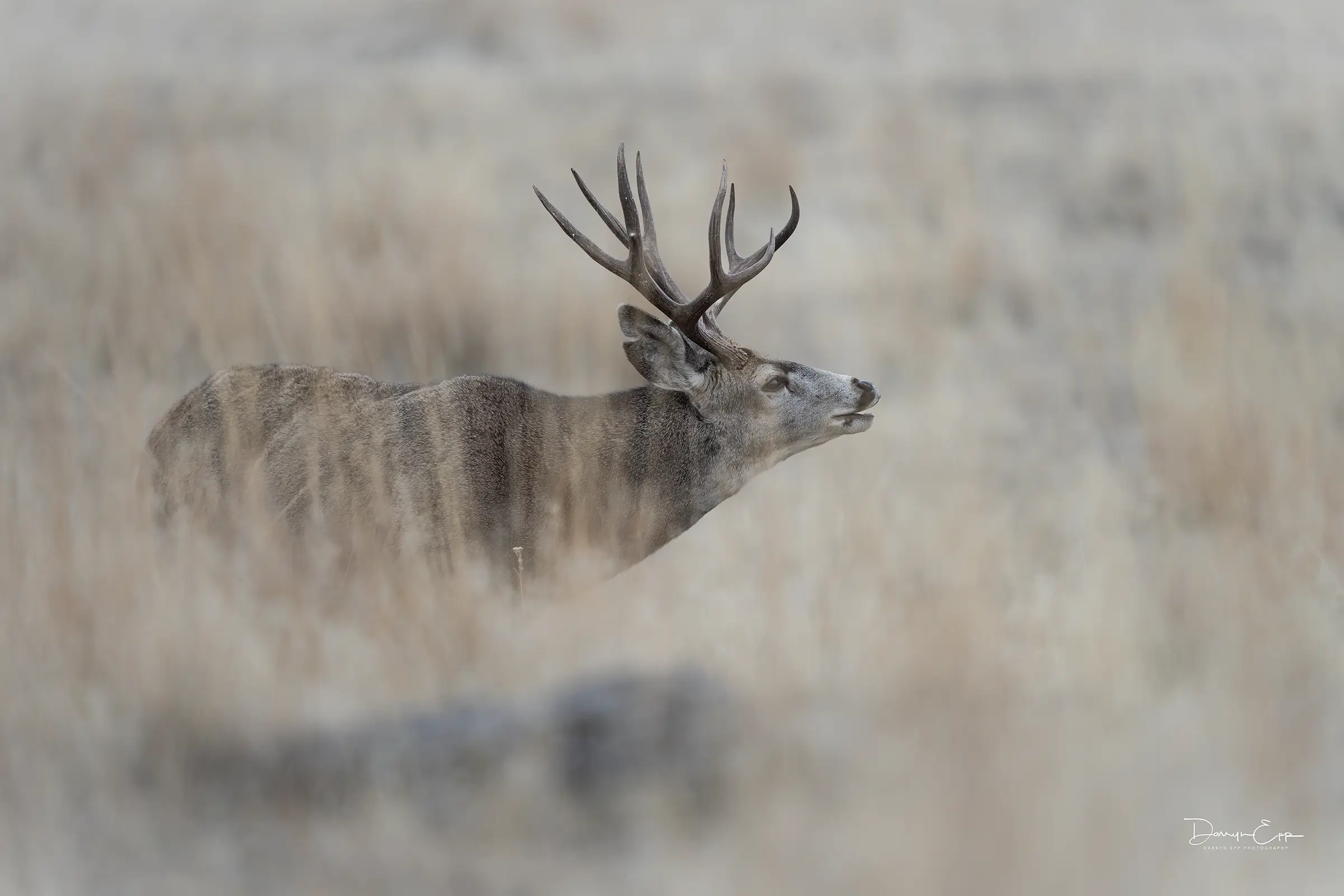
Cover Photo: Darryn Epp Copyright © 2025