By Mark Hall
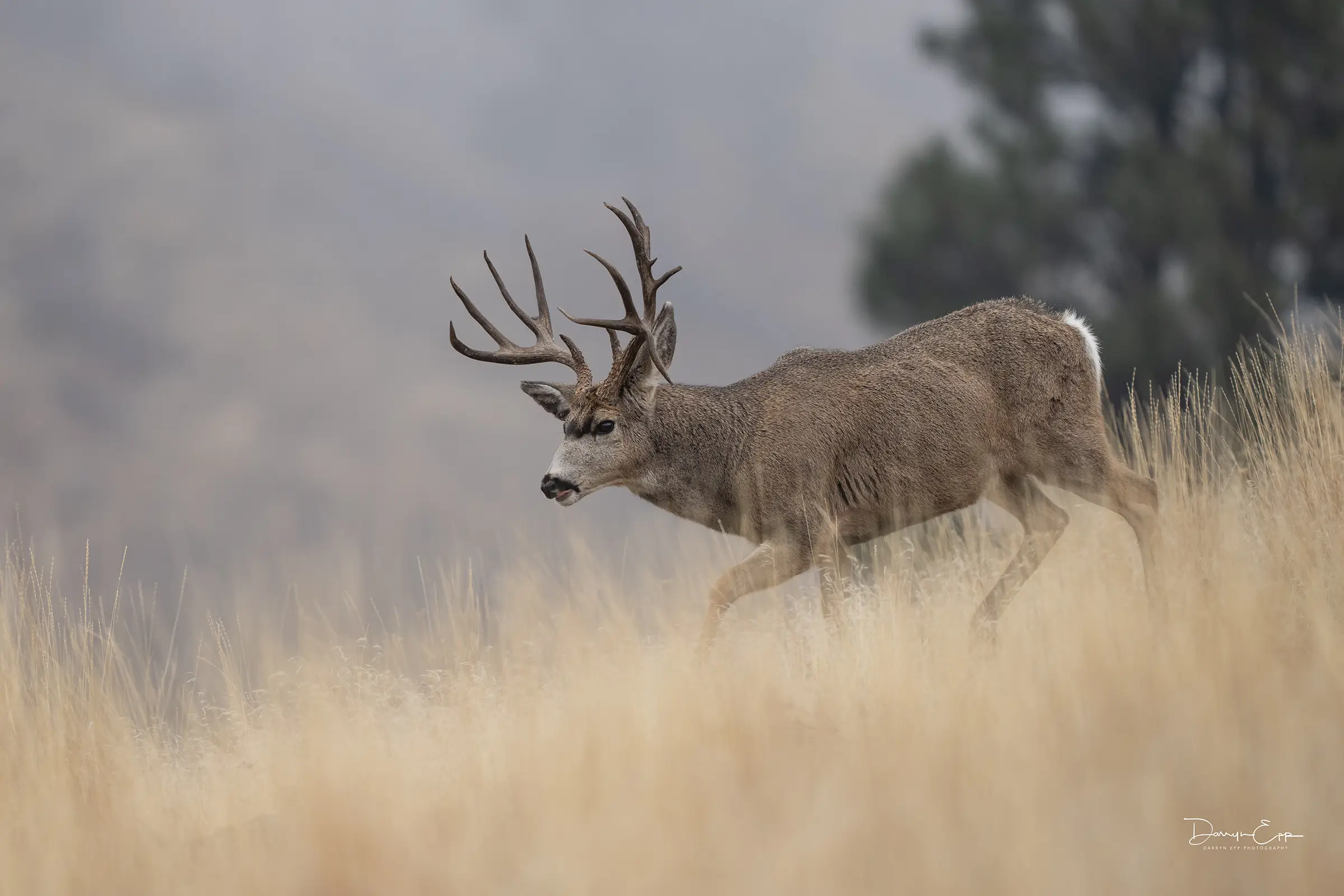
Few animals embody Alberta’s sweeping landscapes quite like the mule deer. From the rugged Rocky Mountain foothills to the rolling prairies and agricultural zones, mule deer are a constant presence—a species that connects Albertans to the land whether they are hunters, hikers, photographers, or simply citizens who enjoy seeing wildlife on the drive home.
While Alberta’s official provincial mammal is the bighorn sheep, its range is limited to pockets of alpine terrain. Mule deer, by contrast, roam across nearly every ecosystem in the province. That ubiquity makes them both iconic and vulnerable. In recent years, concerns have grown about declining abundance, disease prevalence, and shifting population dynamics. Chronic Wasting Disease (CWD), in particular, has hit mule deer harder than whitetails, with bucks showing some of the highest infection rates.
Recognizing these challenges, Alberta’s wildlife managers, researchers, and stakeholders launched a groundbreaking initiative: a collaborative mule deer collaring project designed to fill critical knowledge gaps. At the heart of this effort is a partnership between the Alberta Conservation Association (ACA) and the Alberta Professional Outfitters Society (APOS)—two organizations with deep ties to Alberta’s hunting community. Their funding and support have been instrumental in bringing this ambitious research to life.
As Mark Hall, host of The Alberta Conservationist Podcast, noted in his conversation with lead biologist Shawn Wasel, mule deer management has often been shaped by anecdotal observations. Hunters, ranchers, and rural residents spend thousands of hours on the land, and their “coffee shop talk” about predator impacts or declining deer numbers carries weight. But anecdote alone cannot guide policy.
The North American Model of Wildlife Conservation emphasizes evidence-based decision-making. That’s where the collar project comes in. By equipping mule deer with GPS collars, researchers can track survival, mortality causes, migration routes, and body condition with unprecedented precision. The goal is to move beyond speculation and provide managers with hard data to inform harvest regulations, habitat priorities, and conservation strategies.
The project’s inception came through a multi-stakeholder advisory committee tasked with providing recommendations to government. Among the strongest voices were hunting organizations, who recognized both the conservation imperative and the cultural importance of mule deer.
The Alberta Conservation Association, funded in part by hunting license revenues and conservation levies, brought resources and expertise to the table. The Alberta Professional Outfitters Society, representing guides and outfitters across the province, contributed funding and logistical support. Their members—many of whom rely on healthy mule deer populations for their livelihoods—wanted to ensure sustainable harvest opportunities while also conserving the species for future generations.
As Wasel explained, the project distilled into three broad desires:
- Conserve mule deer on the landscape.
- Provide more mule deer to support sustainable harvest.
- Maintain opportunities for older, mature bucks where appropriate.
These objectives reflect a balance between conservation science and hunting interests. Without the financial backing and advocacy of hunting organizations, the collar project would not have scaled to its current scope.
The project began in earnest last year, with collars deployed in two regions:
- Southeastern Alberta (short-grass prairie and sage steppe) – 62 collars
- Southwestern Alberta (foothills into alpine) – 52 collars
The focus was on does, which drive population growth. Roughly 80 percent of collars were placed on females, with the remainder on bucks. The collars, equipped with GPS and cellular technology, transmit location data multiple times per day. They also include accelerometers that trigger “mortality mode” alerts when a deer stops moving for six hours, allowing rapid investigation of deaths before scavengers obscure evidence.
Future plans include expanding into the Peace River country and Wainwright parkland, pending additional funding. Again, hunting organizations are central to raising the resources needed for this expansion.
The collar project is designed around six objectives:
- Annual survival of adult does. Are females surviving at rates that allow populations to grow or remain stable?
- Buck survival. How do hunting seasons, predation, and disease affect male survival?
- Efficient population estimates. Can mark-recapture methods using collared deer improve aerial survey accuracy?
- Migration and movement corridors. Do Alberta’s mule deer migrate, and if so, where? Early data show about 10 percent are migratory, with some crossing the Continental Divide into British Columbia.
- Body condition. Using portable ultrasounds, researchers measure fat and muscle indices to assess habitat quality and survival prospects.
- Fawn recruitment. While not directly collared, fawn survival is inferred through composition surveys and doe-fawn ratios.
Together, these questions aim to provide a comprehensive picture of mule deer ecology and management needs.
While hunters have provided critical funding and support, the benefits of this research extend to all Albertans. Mule deer are part of the province’s natural heritage. Photographers, hikers, and families enjoy seeing them in fields and aspen stands. Urban residents encounter them browsing in backyards.
As Hall observed, there is something regal and iconic about a mature mule deer buck. Ensuring that such animals remain on the landscape is a goal that transcends hunting. It is about conserving a species that defines Alberta’s identity.
The collar project is still in its early stages, but already it is reshaping how managers understand mule deer populations. With over 140,000 location points collected, researchers are beginning to map survival rates, migration corridors, and mortality causes with statistical confidence.
The partnership between scientists and hunting organizations demonstrates the power of collaboration. Hunters, often portrayed narrowly as harvesters, are in fact among the most committed conservationists. Their dollars, advocacy, and passion are helping ensure that mule deer remain abundant for generations to come.
In Alberta, mule deer are more than just game animals. They are symbols of resilience, adaptability, and wildness. Thanks to this landmark research project—and the hunters who helped make it possible—their secret lives are being revealed, and their future looks brighter.
Citation: Hall, Mark (Host). Alberta Conservationist Podcast: Tracking the Wild: Inside Alberta’s Mule Deer Conservation || Ep. 3 with Shawn Wasel. 2025. Available of Spotify and Apple Podcasts under the Hunter Conservationist Podcast channel.
Cover Photo: Darryn Epp Copyright © 2025