
It took two full days of driving before the road finally gave way to Michael Schneider’s camp—a small clearing tucked deep into north‑central British Columbia, far from anything resembling a town. Out here, the silence felt ancient, but the land still carried the unmistakable scars of logging. Even in the middle of nowhere, the human footprint was impossible to ignore.
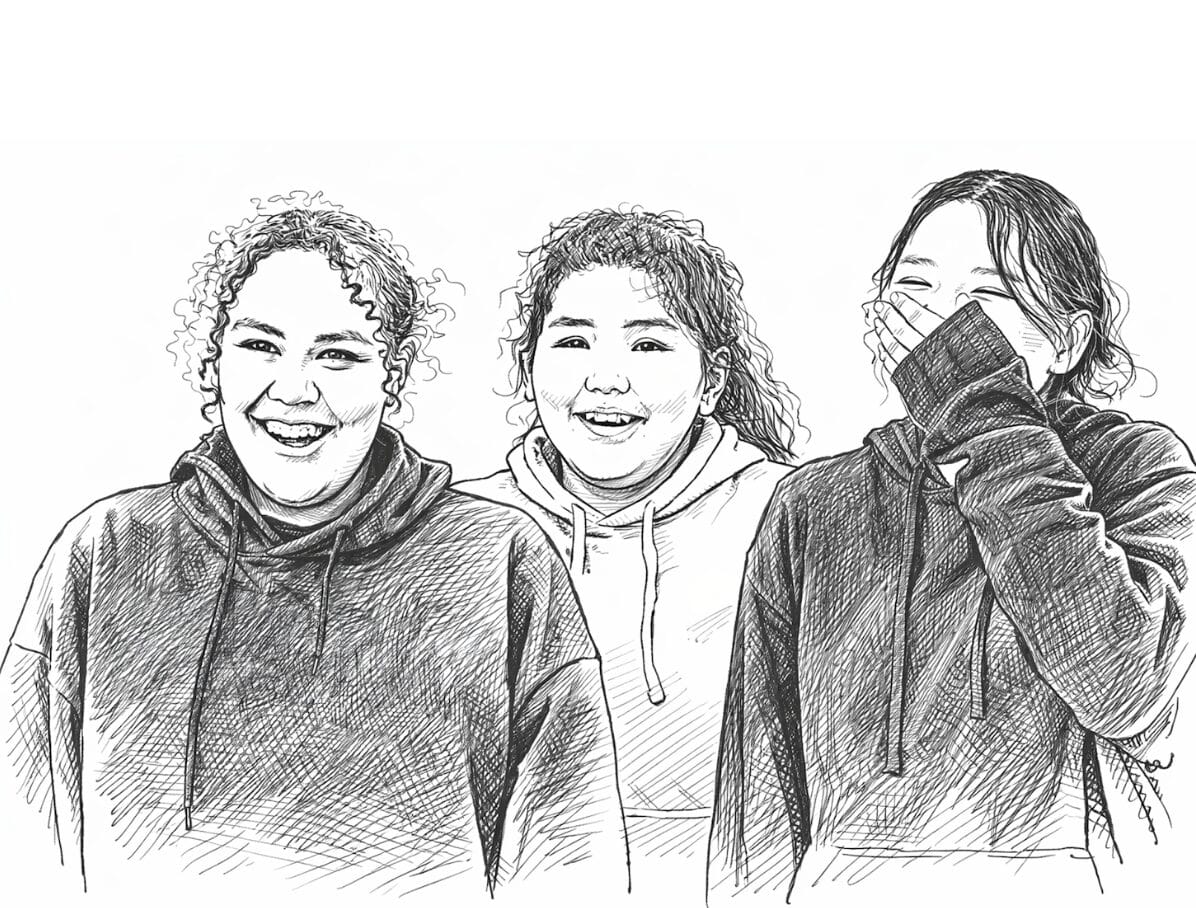
During those first days, the kids in Michael’s apprenticeship program kept their distance. They moved quietly through their chores, eyes down, slipping into tents or the cabin the moment our film crew appeared. They were polite, but wary, unsure of our intentions.
Slowly, almost imperceptibly, something shifted. A question here. A shy smile there. One evening, a young lady asked my name. She told me hers. The next day, another introduced herself. By the end of the week, we all had nicknames, offered casually, but carrying the unmistakable weight of acceptance.
Nights around the campfire grew louder, warmer. Stories replaced silence. Laughter replaced hesitation. And soon enough, the same kids who once hid from us were pounding on the roof of the truck, shouting, “Stop the truck. What, are you blind? There’s a bear back there.” Their teasing was sharp, joyful, and utterly disarming.
In their voices, I heard something deeper than humour. I heard the echo of why we were here at all.
For northern Indigenous communities, colonization was never a clean break or a clear line, it was a long, uneasy negotiation. But in this camp, in the kids’ laughter and their growing confidence, there was a bridge between worlds. A way of being on the land that held both cultures without collapsing under the weight of either.
Yet the harder truths were never far away. In their home community, the cemetery had recently expanded, an expansion driven too often by youth deaths. That reality hung in the background like a shadow, even as the kids joked and worked and found moments of joy under the spruce trees.
Michael Schneider is just one man, one outfitter in a vast landscape. He can’t fix the world. He can’t rewrite history. But what he’s doing here, what he’s offering these kids, reaches far beyond what any hunting client will ever see or pay for.
Michael has a story. The kids have a story. The land has a story. The community has a story. And all of them are woven together through this guide‑outfitting tenure, through this place called Takla.
This is the story we came here to tell.
To watch the full story, visit our YouTube!