Elephant conservation requires an understanding of population dynamics, habitat availability, ecological impacts, and human–elephant interactions. Effective management must account for regional differences in elephant populations, land use, and the needs of communities sharing these landscapes.
Explore scientific research, expert analysis, and field-based insights into elephant ecology, human–elephant conflict, and the role of regulated hunting within broader conservation and management strategies.
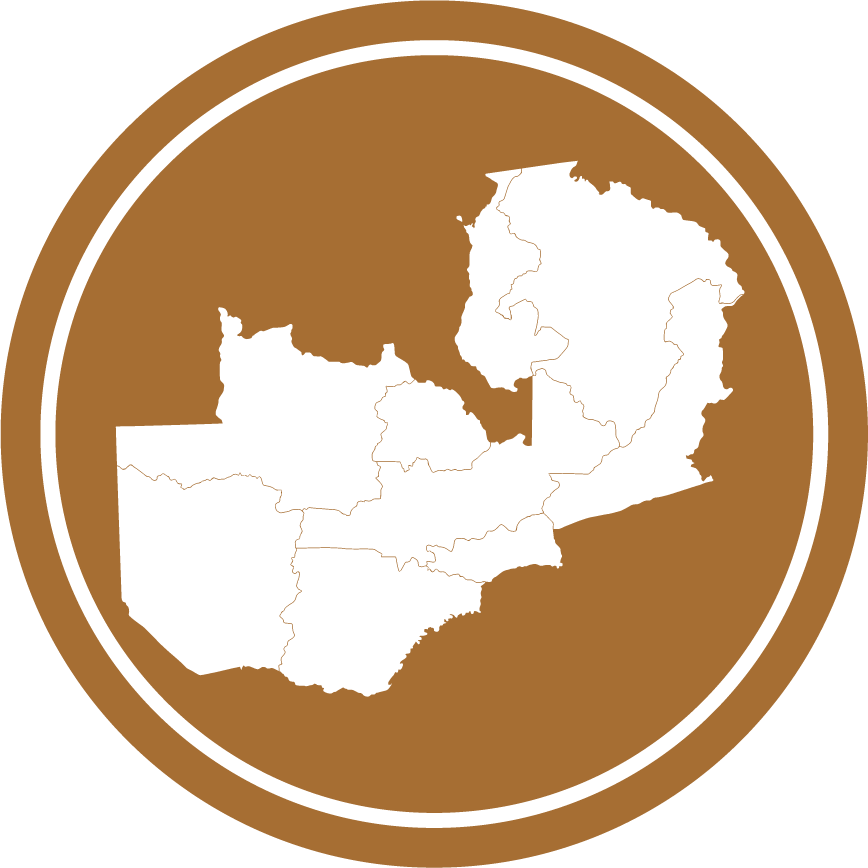
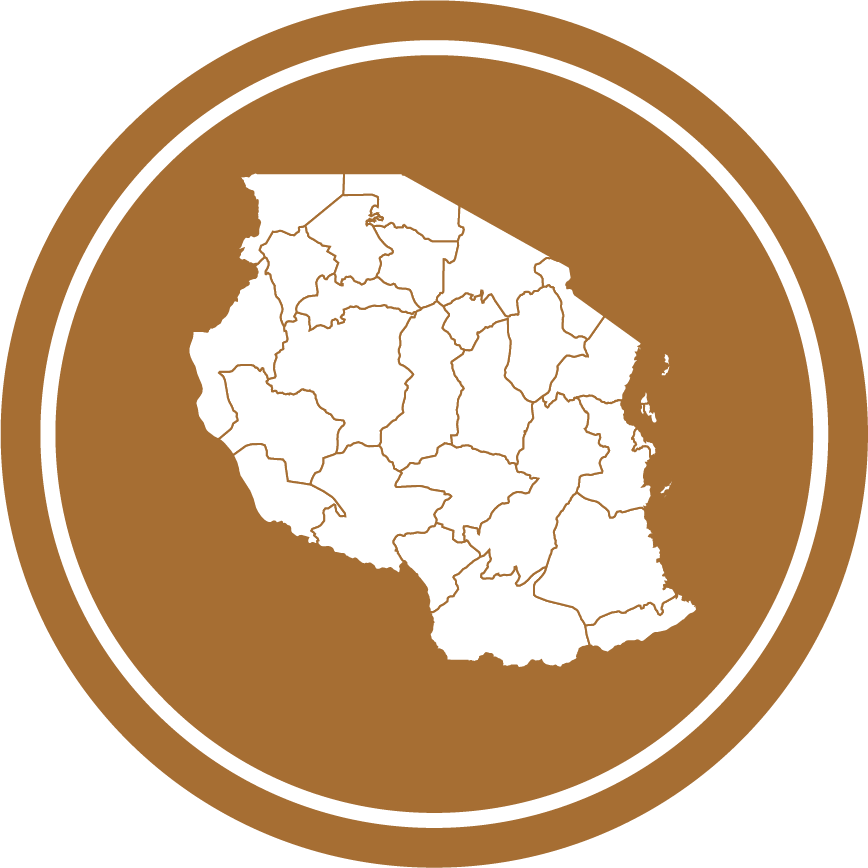
Population is Growing
Population is Stable
Population is Declining
No Population Data
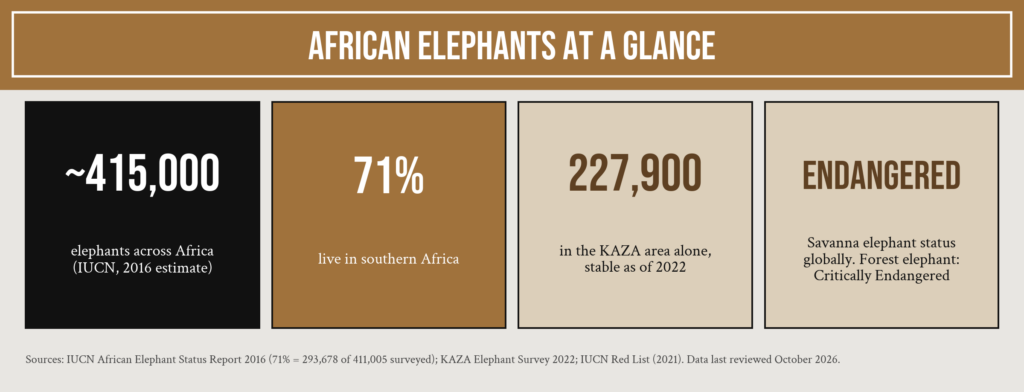
Before you can talk about saving elephants, you have to know where they are. About 415,000 elephants live across Africa, and more than 7 in 10 of them are in southern Africa. The KAZA transfrontier area alone holds 227,900, a population that has held steady. Globally, the savanna elephant is listed as Endangered and the forest elephant as Critically Endangered. Both things are true at once: elephants are in trouble across much of their range and secure in others. Understanding why is the key to conserving them.
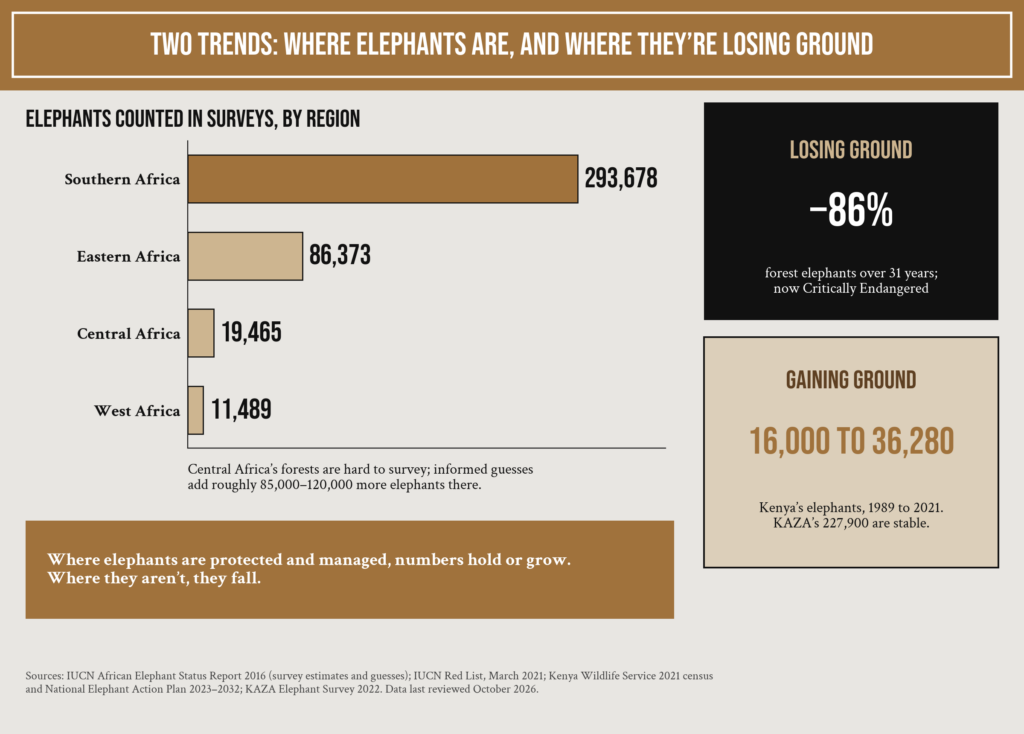
Africa’s elephant story isn’t one story. In central and West Africa, forest elephants have declined by 86% in 31 years. In southern and eastern Africa, many populations are stable or growing: Kenya’s elephants have more than doubled since 1989, and KAZA’s are holding steady. The difference isn’t luck. Where elephants are protected, managed, and valued by the people who live alongside them, their numbers hold or grow. Where they aren’t, numbers fall.
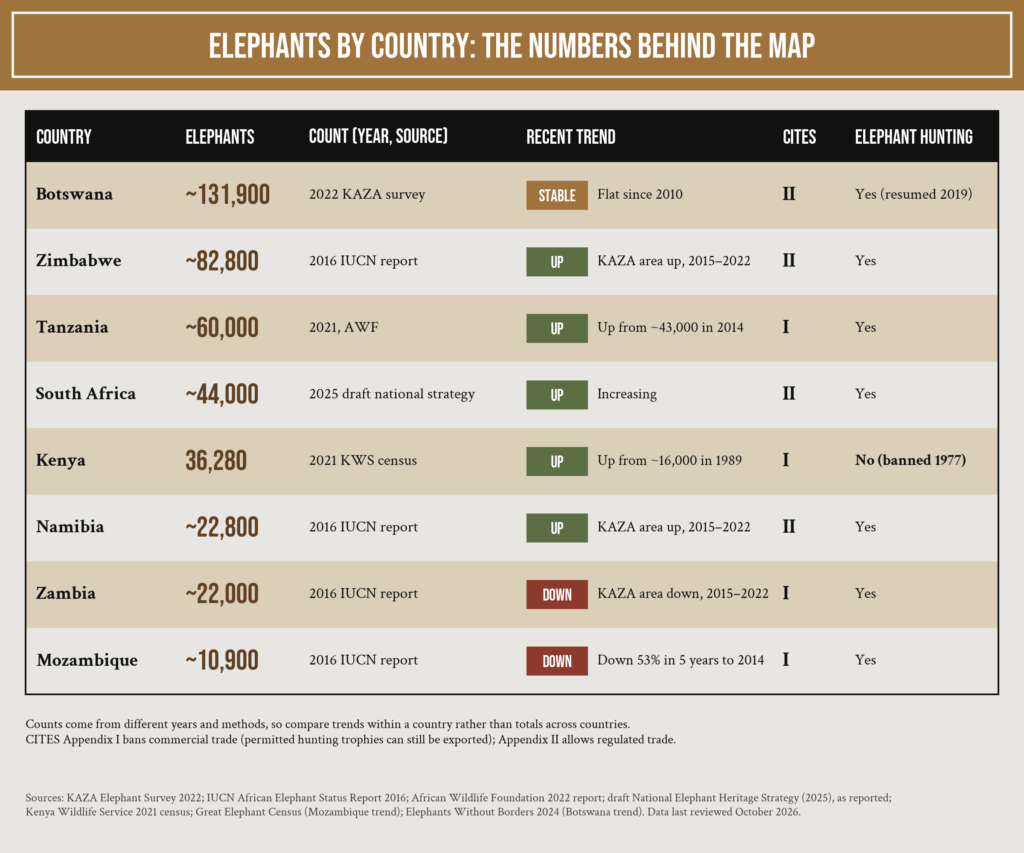
Behind every color on the map is a count. This table shows the most recent population figure we could verify for each country, along with its trend, its CITES listing, and whether regulated elephant hunting is allowed. Surveys happen in different years and use different methods, so the most useful comparison is how each country’s numbers have changed over time, not one country’s total against another’s.